
Article
In Palestine, saving a seed is more than preserving an old crop variety. It is a struggle over who can produce food, retain agricultural knowledge, and decide what happens after the next harvest. From Gaza’s devastated seed banks to community initiatives in the West Bank, agroecology is exposing the economic and political stakes of a seemingly small resource.

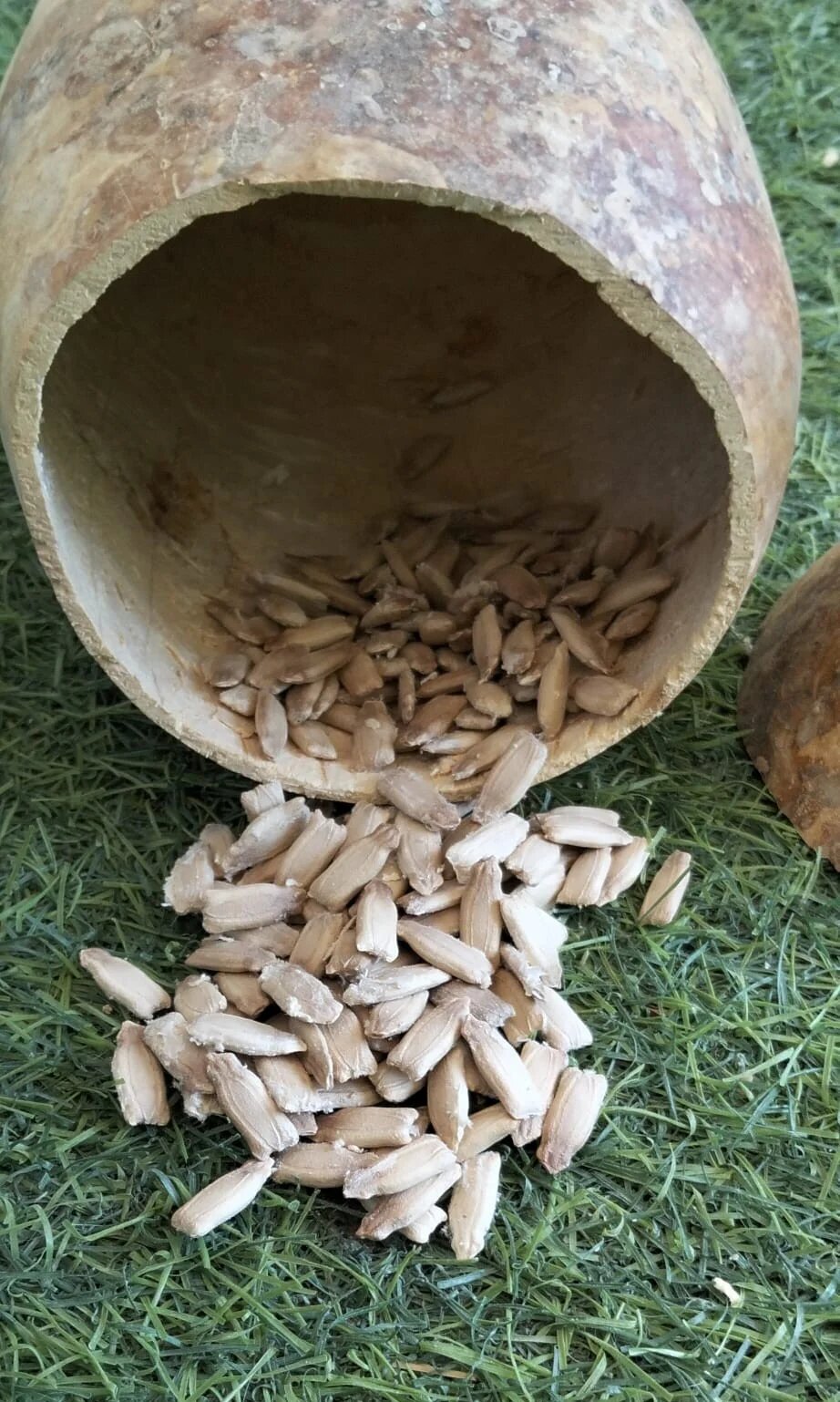
In Deir al-Balah, in the Gaza Strip, displaced farmers have been rebuilding something that can fit inside a handful: the seeds of future harvests. Before Israel’s war on Gaza, the Al-Qarara Seed Bank in Khan Younis, established by agronomist Salama Ayesh Muhanna in 2017, held an estimated 70 tonnes of seed covering 42 crops. Its premises were destroyed, in Al-Qarara town, during the Israeli war on Gaza Strip, in early 2024. Yet, the initiative survived in a different form. Muhanna, his daughter Hanadi and other farmers began recovering seeds kept by families, multiplying them and lending them to growers. By September 2026, they had recovered approximately 32 local varieties. [1]
The story reveals two things at once: the extraordinary vulnerability of agricultural systems under military destruction, and the profound resilience of the knowledge and genetic resources dispersed among farming communities. A destroyed building may be reconstructed; a lost local crop variety, selected over generations and adapted to particular soils and (micro) climates, may be impossible to recover. For Palestinians, the question is therefore not simply how to store seeds safely, but who holds the power to keep Cultivating them.
When seeds become instruments of power
A seed begins the agricultural production cycle, but it also defines relationships between farmers, markets, and institutions. Can farmers save part of their harvest for the following season? Must new seed be purchased every year? Who selects varieties, sets standards, controls access to genetic material, and benefits from improvements? These are questions of political economy, not merely agronomy.
Globally, the seed industry has become increasingly concentrated. According to a 2025 analysis by ETC Group and GRAIN, four corporations—Bayer, Corteva, Syngenta and BASF—controlled approximately 56 percent of the commercial seed market and 61 percent of the pesticides market. The figures concern commercial markets, not the entirety of farmers’ own seed systems. Nevertheless, they indicate the influence a handful of companies can exercise over the technologies, inputs and choices available to growers. [2]
This concentration does not make every commercial or hybrid variety inherently undesirable. Some varieties deliver valuable agronomic performance. The problem arises when farmers’ choices narrow, seed saving becomes economically or legally constrained, and agricultural production depends on purchasing a package of seed, pesticides and other inputs. Seed sovereignty, by contrast, is about keeping farmers’ capacity to conserve, select, improve, multiply, and exchange seed—as well as to participate in deciding how agricultural genetic resources are governed.
These concerns are acute in Palestine, where market dependence is layered onto occupation, restrictions on land and water, and fragmented geography. According to UN Comtrade data accessed through the World Bank’s WITS database, the occupied Palestinian territory imported US$9.18 million in seeds, fruits and spores for sowing under tariff heading HS 1209 in 2023. Imports recorded from Israel accounted for US$5.79 million, or approximately 63 percent of the total. The figures identify a recorded trading partner, not necessarily the genetic origin or corporate ownership of every seed. Still, they illuminate the weight of one route through which Palestinian agricultural inputs are supplied. [3]
The corporate landscape is interconnected as well. Hazera, with operations in Israel, is part of the French-based Limagrain Group, while Swiss agribusiness company Syngenta announced its acquisition of Israeli seed producer Zeraim Gedera in 2007. These links show how the local seed market is embedded in transnational networks of plant breeding, investment and distribution; they do not, by themselves, establish which branded varieties individual Palestinian farmers purchase. [4]
The 1994 Paris Economic Protocol adds a structural dimension. It established trade and customs arrangements under which Palestinian autonomy to import goods is subject to specified lists, procedures and restrictions. The agreement does not directly prohibit farmers from saving traditional seeds. Rather, it limits the space for an independent trade policy and influences the ability to diversify sources of agricultural inputs. [5] Dependency here is neither simply a consumer preference nor a purely technical outcome; it is also produced by the rules governing the economy.
Local seeds, living knowledge
Palestine’s varied ecological zones—from the humid highlands to the semi-arid eastern slopes and the Jordan Valley—have long supported diverse cropping practices. Traditional baladi seeds are not relics preserved unchanged in a museum. Farmers have selected and adapted them through repeated cultivation, observing germination, taste, seasonal performance and suitability for local conditions. Their value resides both in genetic diversity and in the knowledge of how to grow, save and use them.
This is why agroecology has political meaning beyond reducing chemical inputs. It combines ecological practices with cooperation, locally situated knowledge and stronger farmer agency. Saving seed can reduce some recurring purchases, but community-based production also entails costs, including labour, irrigation, testing, storage and distribution. Romanticising it as effortless or automatically cheaper would obscure the investment needed to sustain it.
Palestinian farmers and organisations have nevertheless developed practical alternatives. The Union of Agricultural Work Committees (UAWC) established its local seed-bank programme in the Hebron area in 2003, collecting, conserving and multiplying traditional varieties. Its model encourages farmers to plant locally supplied seeds and return part of the resulting seed harvest, allowing stocks to circulate beyond a single growing season. [6]
A significant step came in October 2024, when UAWC deposited 23 seed samples representing 21 species of vegetables, legumes and herbs in Norway’s Svalbard Global Seed Vault. The deposit is a safeguard against the loss of collections, rather than a substitute for growing and exchanging seeds in Palestinian fields. [7] A seed preserved abroad remains only a potential harvest until land, water, agricultural expertise and farmers can bring it back into use.
Other initiatives pursue complementary approaches. The Palestine Heirloom Seed Library, founded by Vivien Sansour, reconnects traditional varieties with the stories, foods and relationships carried by them. [8] Om Sleiman Farm in Bil’in links agroecological production with community-supported agriculture. Research organisations and community seed banks in places such as Jenin, Nablus and Bethlehem have experimented with conservation, participatory multiplication and seed-lending schemes. Earlier research on Palestinian food sovereignty documented an emerging network of farms and initiatives whose common premise was that farmers should rely more on local resources and have greater control over production. [6]
These initiatives are not interchangeable: a research genebank, a community seed library, and a farm producing vegetables perform different functions. Nor can the existence of small projects alone transform the food economy. Yet, their combined experience provides the ingredients for a wider system—scientific conservation, local multiplication, cultural transmission, community management and farmer-to-farmer exchange.
War on seeds: What is lost when a seed bank is destroyed?
The threat to these efforts is not hypothetical. In November 2000, Israeli soldiers raided and damaged the Marda Sustainable Development Center near Salfit. A contemporary report by the MA’AN Development Center documented damage to nurseries, propagation trays, irrigation systems and equipment. [9] These losses undermined a site that had sought to connect sustainable agriculture with training and community production.
On 31 July 2025, Israeli authorities demolished a building serving a UAWC traditional seed-multiplication unit in the al-Simiya area near as-Samu’, south of Hebron. According to the Land Research Center, the unit occupied about ten dunums, of which four were planted with fifteen local summer vegetable varieties for seed multiplication. Damage to the facility and supporting infrastructure endangered the capacity to produce seed for the next season. The incident must be distinguished from destruction of UAWC’s entire seed collection: it was a multiplication facility that was hit. [10]
Gaza demonstrates the implications on a far wider scale. As of October 2026, approximately two-thirds of the Gaza Strip remained subject to Israeli-imposed access restrictions, including areas under direct Israeli military control. According to the United Nations Office for the Coordination of Humanitarian Affairs (OCHA), restrictions affected 65 percent of Gaza's territory, leaving the Palestinian population concentrated in the increasingly overcrowded remaining areas [11].
The implications for agricultural production are even more severe. A joint geospatial assessment by the Food and Agriculture Organization (FAO) and the United Nations Satellite Centre (UNOSAT) found that, as of 24 June 2026, 73 percent of Gaza's cropland was inaccessible, while only three percent remained both accessible and undamaged [12]. Even the most resilient local seed cannot produce food without a farmer who has safe access to land, viable soil, water and the means to cultivate it. These figures demonstrate that the struggle for seed sovereignty in Palestine cannot be separated from the broader political question of territorial control. Preserving and multiplying indigenous seeds, however essential, cannot restore Palestinian food sovereignty without restoring farmers' access to land, water, and the means of agricultural production.
The recovery of Al-Qarara’s seeds therefore should not become a comforting narrative of resilience that eclipses destruction. What makes the story remarkable is precisely the scale of what farmers have lost. The initiative’s survival depended on seed kept outside its central store, informal solidarity and the possibility—however constrained—of cultivating plots again. It is evidence for decentralised conservation, not evidence that communities can compensate indefinitely for destroyed agricultural infrastructure.
From scattered initiatives to seed sovereignty
Palestinian Agricultural Law No. 2 of 2003 already treats agricultural genetic resources as subject to national sovereignty, assigning public authorities the responsibility to document, conserve, and manage them. It also recognises individual farmers’ property rights in locally circulated varieties. [13] The challenge is to translate these principles into arrangements that protect community stewardship rather than reducing seed sovereignty to state ownership or centralised storage.
The International Treaty on Plant Genetic Resources for Food and Agriculture offers relevant guidance. Its Article 9 recognises farmers’ contributions, the importance of traditional knowledge and participation in decisions. It safeguards existing rights to save, use, exchange and sell farm-saved seed, subject to national law and as appropriate. [14] These principles suggest that effective governance must link research institutions to the people who continue to develop crop diversity in their fields.
A workable Palestinian approach would start by mapping existing seed collections and the farmers conserving traditional varieties, while recognising that documentation must protect sensitive knowledge and community interests. Seed samples should be backed up in several locations, with living stocks multiplied in fields and returned to communities. Laboratories and agricultural extension services can help test seed health and germination, while participatory breeding and local knowledge guide adaptation to drought, disease and changing climatic conditions.
Equally important is the economic side. Seeds conserved in a bank but unavailable in useful quantities will have little influence over dependence on external suppliers. Community seed lending, cooperatives, local marketing arrangements and support for products grown from baladi varieties can make conservation economically viable. Women farmers and rural knowledge holders must be involved in decisions and recognised for their expertise rather than treated simply as beneficiaries. None of this removes the need for public financing, clear rules, and access to markets.
In Gaza, rebuilding seed banks must be part of agricultural recovery, not an isolated heritage project. Farmers need safe access to their land, rehabilitated water infrastructure, functioning nurseries and the ability to move seed and equipment. Humanitarian seed distributions should, wherever feasible, strengthen locally adapted varieties and farmer-managed systems rather than create a fresh cycle of dependency.
Ultimately, the measure of seed sovereignty is not how many varieties sit on a shelf. It is whether farmers can decide what to plant, save seed for the following season, exchange it without losing their rights, and sustain livelihoods from the food they produce. Palestinian baladi seeds embody inherited knowledge, but their significance is oriented toward the future. Ultimately, their survival poses a much larger political question: who will control the next harvest?
References
- Al-Mughrabi, Nidal, and Haseen Alwazeer. (2026). “Gaza Seed Bank Helps Farmers Cultivate the Little Land They Have Left.” Reuters, 3 September 2026.
- ETC Group and GRAIN. (2025). “Top 10 Agribusiness Giants: Corporate Concentration in Food & Farming in 2025.” June 2025.
- World Integrated Trade Solution (WITS), World Bank. “Occupied Palestinian Territory: Imports of Seeds, Fruits and Spores for Sowing (HS 1209), 2023.” Data sourced from UN Comtrade.
- Hazera. “Who We Are.” Official company information. See also Syngenta AG (2007), “Syngenta Reinforces Vegetable Seeds with Zeraim Gedera Acquisition,” press release filed with the US Securities and Exchange Commission, 9 July 2007.
- Government of Israel and Palestine Liberation Organization. (1994). “Protocol on Economic Relations (Paris Protocol).” 29 April 1994, particularly Articles III and VIII.
- Al-Salehi, Abdalaziz. (2021). “Palestinian National Food Sovereignty in Light of the Colonial Context.” Dalia Association, with support from the Heinrich Böll Foundation – Palestine and Jordan.
- Svalbard Global Seed Vault. (2024). “October 2024: Arrival of More Than 30,000 New Seeds.” 24 October 2024.
- Sansour, Vivien. “Palestine Heirloom Seed Library.” Official project description.
- MA’AN Development Center. (2000). “Annual Report 2000.” Page 9, documentation of the raid on the Marda Sustainable Development Center, 11 November 2000.
- Land Research Center. (2025). “Israeli Occupation Demolishes a Building Belonging to the Traditional Seed Bank in Southern Hebron.” 31 July 2025. Original in Arabic.
- United Nations Office for the Coordination of Humanitarian Affairs (OCHA). “Humanitarian Situation Report: 2 October 2026.” 2 October 2026.
- Food and Agriculture Organization of the United Nations (FAO) and United Nations Satellite Centre (UNOSAT). “Gaza Strip: Only 3 Percent of Gaza’s Cropland Remains Accessible and Undamaged, New Assessment Finds.” 18 August 2026.
- Palestinian National Authority. (2003). “Agricultural Law No. 2 of 2003, as Amended.” Particularly Articles 27–28. Official Palestinian legislation portal.
- Food and Agriculture Organization of the United Nations (FAO). “How to Promote Farmers’ Rights.” International Treaty on Plant Genetic Resources for Food and Agriculture, particularly Article 9.